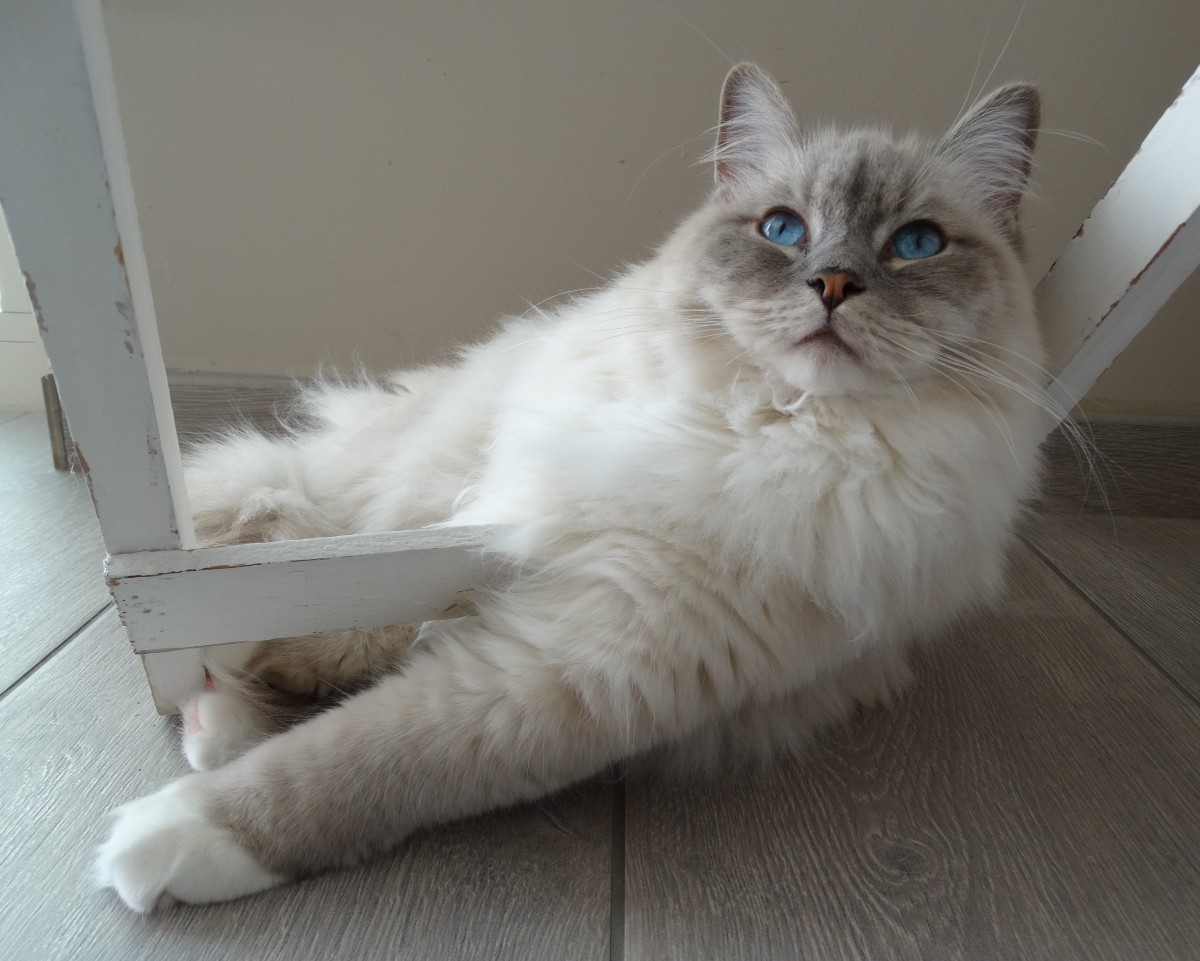
Origin and Development
The Himalayan cat breed originated in the United States, specifically through the efforts of breeders in the 1930s. The breed was established by crossing the Persian and Siamese cats, a process that began at Harvard University and was later independently developed by Brian Sterling-Webb in the UK. Jean Mill, a breeder from California, further contributed to the development of the breed by taking graduate classes in genetics at the University of California, Davis, and independently crossing the Persian and Siamese cats to create the Himalayan by 1948. This genetic cross resulted in a cat that combined the long, luxurious coat of the Persian with the color points of the Siamese.
Recognition of the Himalayan as a distinct breed came in 1957 when the Cat Fanciers' Association (CFA) granted it breed recognition. Early breeders focused on adding Siamese coloration to long-haired cats, reinforcing the stock by outbreeding to Persians to retain Persian trait dominance. However, by the 1960s, some breeders began reintroducing Siamese stock, leading to a decline in the "old" or Siamese-like specimens. In the 1980s, a concerted effort to re-establish the breed along more formally Persian lines led to the breed being merged into Persian as a variant in some registries, such as the CFA in 1984. This decision was made in part due to the breed's increasing similarity to the Persian, particularly in terms of body type and coat texture.
The Himalayan has been featured in popular culture, including the CBS television series "Tucker's Witch" (1982), where a Himalayan cat named Dickens was the familiar to witch Amanda Tucker. The character of Dickens was particularly memorable for his fluffy white coat and blue eyes, characteristics that are typical of the breed. In the 1993 movie "Homeward Bound: The Incredible Journey," a Himalayan cat named Sassy was one of the main characters, adding to the breed's fame and appeal.
Appearance and Characteristics
The Himalayan cat is medium to large in size, with a cobby body and low legs. Its head is round and massive, featuring a round face and a thick neck. The nose is snubbed and pushed in, and the ears are small, round-tipped, and slightly pointed forward. The eyes are large and round, with pointed Himalayans having blue eyes and non-pointed Himalayans having copper eyes, except for the silver and golden tabby, which have green eyes. This coloration pattern is known as color point, a distinctive feature inherited from the Siamese parent.
The Himalayan has a long and thick coat all over the body, including the tail and ear tufts. The coat comes in most colors, with mink and sepia being prohibited colors. The breed resembles the Persian in type, conformation, and coat length and texture, but does not resemble the Siamese in type.
Temperamentally, the Himalayan is calm and devoted, making excellent companions. They prefer a quieter home and are playful in a sedate kind of way, enjoying having an assortment of toys. They are social and intelligent, with a medium level of friendliness and a low energy level. They are also highly trainable and adapt well to different environments, earning a rating of 5 for adaptability in the CFA. This adaptability is particularly impressive given their brachycephalic build, which can pose challenges in certain environments.
Health Considerations
Like the Persian, the Himalayan is a brachycephalic breed, which predisposes it to certain health issues. These include respiratory infections, epiphora (excessive tearing), corneal abrasions, ulcers, and corneal sequestration. Himalayans are also susceptible to polycystic kidney disease, a hereditary condition that results in cysts growing in the kidney. They have a higher incidence of feline asthma and are under-represented in cases of urate urolithiasis, with an odds ratio of 0.37 in a review of over 5,000 cases. These health concerns require vigilant monitoring and appropriate veterinary care.
Other health concerns include dermatophytosis (ringworm), urticaria pigmentosa (a benign mast cell disorder), and idiopathic facial dermatitis, a type of dermatitis only observed in the Persian and Himalayan cat. This condition is characterized by greasy skin, debris adhering to the folds of the face and nose, ceruminous otitis externa, secondary bacterial folliculitis, Malassezia dermatitis, and pruritus. The onset of this condition is typically between 10 months and six years of age, and it can be managed with proper grooming and veterinary treatment.
Lifespan and Care
The average lifespan of a Himalayan cat is between 9 and 15 years. This lifespan is influenced by a variety of factors, including proper care, genetics, and the management of health issues.
Given their brachycephalic nature, Himalayans may require special care to prevent respiratory issues. This includes keeping the environment well-ventilated and avoiding extreme temperatures.
Compatibility and Lifestyle
The Himalayan is a social cat that enjoys the company of its owners. They are dependent and gentle, making them suitable for families with children. However, they may not be the best choice for highly active households due to their lower energy level. They are also generally quiet and may not be the best choice for those looking for a vocal pet. Their adaptability and social needs are rated 4 by the CFA, indicating they have moderate social requirements.
They do well with other pets if properly introduced, although they may not be as friendly towards dogs as they are with humans. Their adaptability and social needs are rated 4 by the CFA, indicating they have moderate social requirements. This makes them a good choice for homes with multiple pets, as long as the introductions are managed carefully to ensure a harmonious environment.
Cost and Ownership Considerations
Himalayans are generally more expensive than other cat breeds due to their rarity and the specialized care they require. The initial purchase price can range from $500 to $1,500 or more, depending on the breeder and the cat's lineage. This price reflects the time, effort, and resources that breeders invest in producing healthy, well-socialized cats.
Responsible breeders will provide information on the health and temperament of their cats, as well as guidance on proper care and nutrition. This includes providing a health guarantee and ensuring that the cats are up-to-date on vaccinations and deworming. Before bringing a Himalayan into your home, consider whether your lifestyle and living situation are a good match for this breed. They require a quiet, comfortable environment and may not be the best choice for those who are away from home for long periods of time or those who prefer a more active and vocal pet.
Frequently Asked Questions
What is the lifespan of the Himalayan?
The average lifespan of the Himalayan is about 9 - 15 years. Good nutrition and regular veterinary care support a healthy life.
What is the temperament of the Himalayan?
The Himalayan is known for: Dependent, Gentle, Intelligent, Quiet, Social. Its affection rating is very high. Its energy level is low.
What size and weight is the Himalayan?
It is a small cat, typically around 3 - 6 kg as an adult.
Is the Himalayan easy to care for?
Available ratings indicate very high grooming needs, and high shedding. Routine brushing, ear and dental care, and nail trims are still recommended.
Is the Himalayan good with kids and other pets?
Available ratings indicate relatively low child-friendliness, and relatively low pet-friendliness. Supervised, gradual introductions are recommended.
How much exercise does the Himalayan need?
With a low energy level, it needs walks, play or training matched to its stamina.



