Origin and Development
The Havana Brown cat breed originated in the United Kingdom in the 1950s, resulting from a planned breeding program between chocolate-carrying Siamese and domestic shorthair black cats. This initiative was led by a group of British cat fanciers known as "The Havana Group," which later became "The Chestnut Brown Group. " The breed's name is believed to be derived from its coat color, which resembles that of Havana cigars, and possibly from the Havana rabbit, although the latter is considered more accurate based on historical records in the UK.
Early breeders introduced an Oriental Siamese type Russian Blue into the breeding process, but genetic testing suggests that this influence has diminished over time. The breed continued to develop in the UK, becoming known as the Chestnut Brown Oriental, and retained the Siamese conformation. However, genetic problems led to the need for genetic outcrossing, which caused the breed to evolve into a different look than originally intended. This outcrossing was necessary to address issues such as a high incidence of deafness and a propensity for polydactyly, which were observed in the breed.
In the United States, the imported kittens were crossbred with chocolate and seal point Siamese, resulting in only chocolate or pointed offspring. American breeders selectively bred for self-brown kittens, focusing on maintaining the unique head shape and a rich, warm mahogany color. This US-bred version, known as the USA-type Havana Brown, has been recognized for competition since the late 1950s and was accepted for Championship status by the Cat Fanciers' Association (CFA) in 1964. The CFA's recognition played a significant role in the breed's popularity and standardization.
Appearance and Characteristics
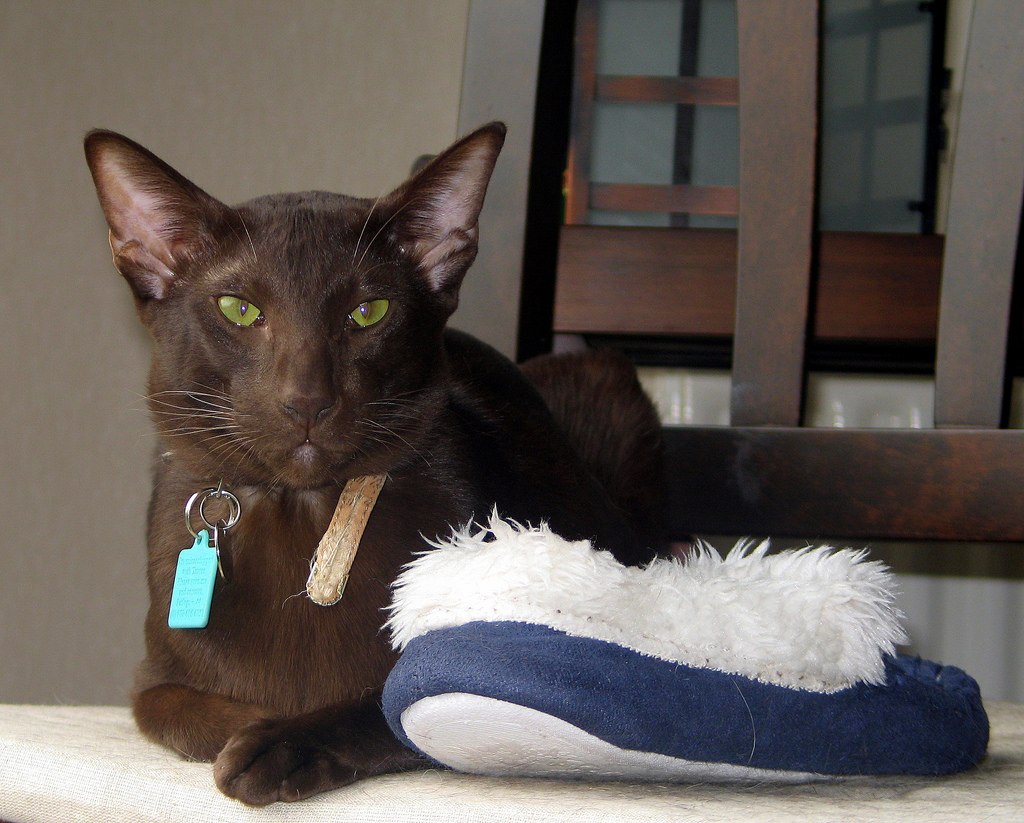
The Havana Brown is a well-balanced, moderately sized, muscular short-haired cat with a body of average length. They are known for their warm brown coat, typically reddish-brown, with no obvious tabby markings. Kittens will show markings initially, but they resolve as the cat ages, disappearing completely by one year. Whiskers must also be brown, and the eye color is green. Paw pads are pink or rose-colored, and ears are moderately large. Males tend to be larger than females, with an average weight of 8 to 12 pounds, compared to other breeds.
This breed is intelligent and often uses its paws to examine objects and communicate with owners. They are curious and interactive, often greeting visitors by placing paws on someone's thigh and offering a meow of introduction. Havana Browns are playful and curious but rarely destructive unless left without companionship. While many enjoy being lap cats, others prefer to sit quietly beside their human companions or ride on their shoulders during daily activities. Their coat texture is smooth and fine, which contributes to their overall elegance.
They have a moderate level of activity compared to other short-hair cat breeds and are known for their strong desire to be involved in everything their human companions do. This breed is highly adaptable, with a high affection level and social needs, making them excellent companions for families and those who enjoy interactive pets. Their adaptability also extends to different living environments, from apartments to large homes, as long as they receive adequate attention and exercise.
Temperament and Behavior
The Havana Brown is affectionate, curious, and friendly, with a high level of intelligence and playfulness. They have a strong desire to spend time with their people and are often seen gently touching their human companions, as if extending a paw of friendship. This breed is also demanding, requiring attention and interaction, which makes them less suitable for those who prefer a more independent pet. Their social nature means they can become stressed or exhibit undesirable behaviors if left alone for extended periods.
Havana Browns are curious and interactive, needing to be part of daily activities. It is common for them to become close companions with family dogs and can travel well with their owners without objection. Their behavior is often described as a mix of playfulness and a desire for companionship, making them a delightful addition to any household. They are also known for their ability to learn tricks and respond well to training, which can be a fun activity for both the cat and the owner.
Health and Genetics
The Havana Brown is a relatively healthy breed with no known genetic diseases. However, they may have a slightly higher occurrence of gingivitis, which is attributed to their Siamese ancestry.
The breed's development involved selective breeding for a specific coat color and conformation, which has resulted in a small breeding pool, particularly for the USA-type Havana Brown. As of 2024, there were only 15 USA-type catteries registered worldwide, with the majority located in North America. This limited breeding pool has led to the USA-type Havana Brown being considered an endangered breed. The rarity of the breed also means that potential owners should be prepared for a higher price point, which can range from $500 to $1500 for a well-bred kitten.
Buying a Havana Brown
Look for breeders who prioritize genetic health and temperament, and be prepared to ask about the kitten's background and health history. Reputable breeders will provide health clearances and be transparent about the kitten's lineage.
Since the USA-type Havana Brown is an endangered breed, finding a breeder with registered catteries can be challenging. Be patient and thorough in your search, and be prepared for a higher price point due to the breed's rarity. It is also advisable to visit the cattery in person to ensure the kittens are raised in a clean, healthy environment.
Matching Your Household
Before bringing a Havana Brown into your home, consider whether your lifestyle matches the needs of this breed. They require a family that is home often and can provide them with ample attention and interaction. Their high energy level and curiosity may not be ideal for those who prefer a more laid-back pet. If you have other pets, such as dogs, Havana Browns can be great companions, as they are friendly and can adapt well to multi-pet households.
However, their high energy level and need for companionship may not be suitable for individuals who work long hours or are frequently away from home. Havana Browns are best suited to households where there is someone home during the day to engage with them and provide the mental stimulation they need. Their intelligence and social nature also mean they can be prone to boredom and destructive behavior if not properly stimulated.
Frequently Asked Questions
What is the lifespan of the Havana Brown?
The average lifespan of the Havana Brown is about 10 - 15 years. Good nutrition and regular veterinary care support a healthy life.
What is the temperament of the Havana Brown?
The Havana Brown is known for: Affectionate, Curious, Demanding, Friendly, Intelligent, Playful. Its affection rating is very high. Its energy level is high.
What size and weight is the Havana Brown?
It is a small cat, typically around 3 - 5 kg as an adult.
Is the Havana Brown easy to care for?
Available ratings indicate low grooming needs, and moderate shedding. Routine brushing, ear and dental care, and nail trims are still recommended.
Is the Havana Brown good with kids and other pets?
Available ratings indicate high child-friendliness, and very high pet-friendliness. Supervised, gradual introductions are recommended.
How much exercise does the Havana Brown need?
With a high energy level, it needs walks, play or training matched to its stamina.



