Origin and Development
The Exotic Shorthair, a breed of cat, originated in the United States. Developed as a short-haired version of the Persian, this breed was initially created through secret crossbreeding efforts by American Shorthair breeders in the late 1950s. These breeders crossed the Persian with the Russian Blue and the Burmese to improve the body type of the American Shorthair. Recognized as a new breed in 1966 by the Cat Fanciers' Association, the Exotic Shorthair was named by American Shorthair breeder Jane Martinke, who proposed the idea to a Cat Fanciers' Association judge. The breed's development was a response to the desire for a Persian-like cat with a more robust body, and it was not until 1987 that the Cat Fanciers' Association closed the Exotic Shorthair breed to shorthair outcrosses, allowing only Persian as the allowable outcross breed. This decision helped solidify the breed's standards and characteristics, ensuring a consistent and predictable outcome in breeding.
By 1987, the Cat Fanciers' Association had closed the Exotic Shorthair breed to shorthair outcrosses, allowing only Persian as the allowable outcross breed. This decision was crucial for maintaining the breed's distinct look and temperament.
Appearance and Physical Traits
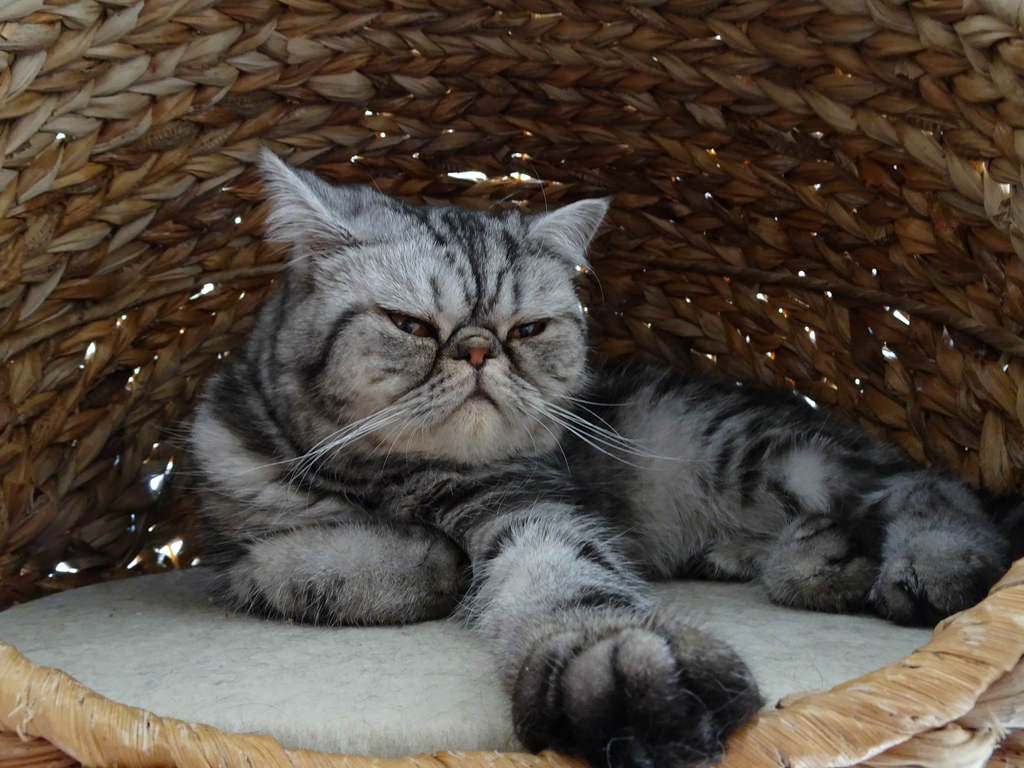
The Exotic Shorthair is a medium to large-sized breed, with a body closely resembling the Persian. It boasts a large, round head, prominent full cheeks, and large round eyes that give it a distinctive expression. The ears are small and rounded at the tips, set low on the head, contributing to its broad, rounded appearance. The tail is relatively short in proportion to the body, maintaining the breed's compact and balanced silhouette. The Exotic Shorthair comes in all different color variations, similar to the British Shorthair and the Persian, with a wide range of coat patterns and colors that make each cat unique.
Some Exotic Shorthairs may carry a copy of the recessive longhair gene due to the regular use of Persian as outcrosses. When two such cats mate, there is a 1 in 4 chance of each offspring being longhaired. The Cat Fanciers' Association does not consider longhaired Exotics as Persians, while the International Cat Association accepts them as Persians. The American Cat Fanciers Association registers them as a separate Exotic Longhair breed. This distinction highlights the careful attention to breed standards and the desire to maintain the Exotic Shorthair's specific look and temperament.
Temperament and Personality
The Exotic Shorthair is known for its gentle and friendly nature, sharing a similar personality to the Persian. They enjoy having fun and do not mind the company of other cats and dogs. These cats love to curl up in a safe place for a nap and are affectionate towards their own people. However, they can be cautious around strangers at first but usually warm up to visitors with time. The breed is described as affectionate, sweet, loyal, quiet, and peaceful, making them ideal companions for families and individuals seeking a laid-back, easygoing pet. Their trainability is also rated as medium, making them responsive to training and guidance, which is particularly beneficial for owners looking to incorporate the Exotic Shorthair into a multi-pet household or for those interested in agility training.
Health Considerations
Like the Persian, the Exotic Shorthair is a brachycephalic breed, which means it has a pushed-in face due to the nose and eyes being close together. This can lead to certain health issues. One common condition is brachycephalic airway obstructive syndrome (BAOS), which can cause upper airway abnormalities, increased airway resistance, and inflammation of airway structures. Treatment may include weight loss, surgery, and avoiding humid or hot conditions. The condition can be particularly distressing for the cat and requires vigilant monitoring and appropriate veterinary care.
Exotic Shorthairs are also prone to feline polycystic kidney disease (PKD), a disease that can lead to kidney failure. Studies have shown that the prevalence of PKD in Exotics is between 40% and 50% in developed nations.
Recognition and Popularity
The Exotic Shorthair has gained steady popularity among cat fanciers, thanks to the devoted advocates of the breed who recognized the value in a Persian and Shorthair crossbreed. In 1967, the Cat Fanciers' Association first accepted the Exotic Shorthair for Championship status, and in 1971, the first Exotic Shorthair achieved the status of Grand Champion. This achievement was a significant milestone for the breed, demonstrating its potential for competition and its appeal to breeders and cat enthusiasts alike. The Fédération Internationale Féline recognized the Exotic Shorthair in 1986, further solidifying its status as a respected and recognized breed. In 1991, an Exotic was the Cat Fanciers' Association's Cat of the Year, and in 1992, the Cat Fanciers' Association's Best Kitten was an Exotic. These accolades highlight the breed's growing popularity and its status as a favorite among cat fanciers.
Buyer's Checklist
- Research the breed's history and characteristics to ensure it aligns with your lifestyle.
- Look for a breeder who conducts health screenings for conditions like brachycephalic airway obstructive syndrome and feline polycystic kidney disease.
- Consider the grooming needs of the Exotic Shorthair, as they have a short coat that requires regular maintenance to keep it in top condition.
- Ensure your home provides a safe and comfortable environment for your Exotic Shorthair, with space for play and relaxation.
- Be prepared for the potential costs associated with health care and specialized care for a brachycephalic breed.
Cost and Lifestyle Considerations
The Exotic Shorthair may be more expensive than other cat breeds due to the specialized care and health screenings required. These cats may require more frequent veterinary visits, especially for monitoring brachycephalic-related conditions and managing PKD. Despite the higher cost, the Exotic Shorthair's affectionate nature and peaceful demeanor make it a rewarding companion for those willing to invest in its care.
Frequently Asked Questions
What is the lifespan of the Exotic Shorthair?
The average lifespan of the Exotic Shorthair is about 12 - 15 years. Good nutrition and regular veterinary care support a healthy life.
What is the temperament of the Exotic Shorthair?
The Exotic Shorthair is known for: Affectionate, Sweet, Loyal, Quiet, Peaceful. Its affection rating is very high. Its energy level is low.
What size and weight is the Exotic Shorthair?
It is a small cat, typically around 3 - 6 kg as an adult.
Is the Exotic Shorthair easy to care for?
Available ratings indicate relatively low grooming needs, and relatively low shedding. Routine brushing, ear and dental care, and nail trims are still recommended.
Is the Exotic Shorthair good with kids and other pets?
Available ratings indicate moderate child-friendliness, and moderate pet-friendliness. Supervised, gradual introductions are recommended.
How much exercise does the Exotic Shorthair need?
With a low energy level, it needs walks, play or training matched to its stamina.



