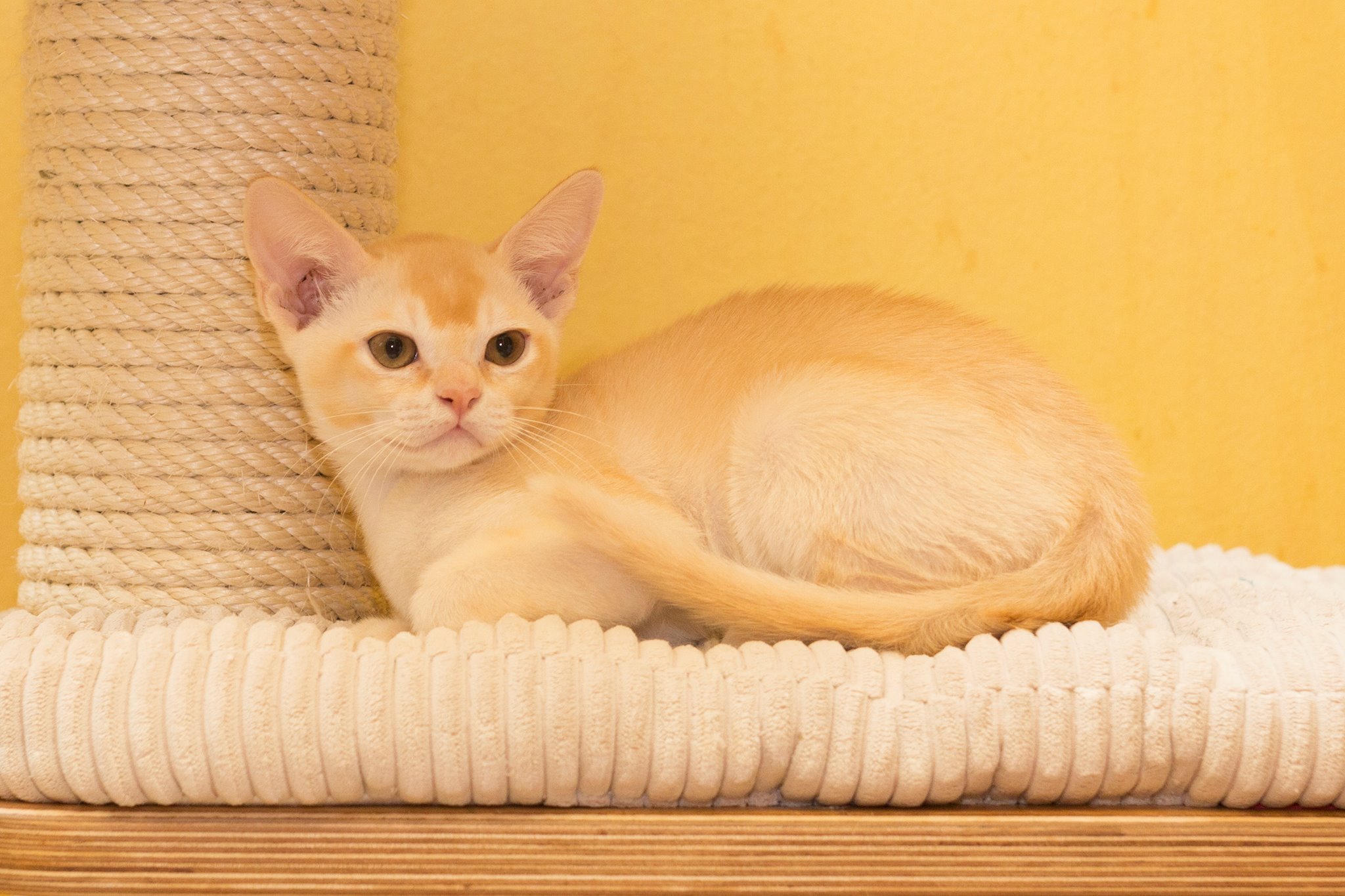
Origins and Development
The European Burmese, a pedigreed breed of domestic cat, originated in Burma, with its roots tracing near the Thai–Burma border. Developed through selective breeding in the United States and Britain, the breed stands out for its unique standards and characteristics.
The modern European Burmese can trace its lineage back to one female cat named Wong Mau, who was brought from Burma to the United States in 1930. Wong Mau was bred with American Siamese cats, leading to the development of the distinct Burmese breed. The breed's development was closely monitored by breeders such as Dr. Joseph Thompson, who was instrumental in the breed's establishment.
Most modern cat registries do not formally recognize the two versions of the Burmese as separate breeds, but those that do refer to the British type as the European Burmese. This distinction stems from the development of different breed standards by American and British breeders, a unique occurrence among pedigreed domestic cats. The first European Burmese cats were shown in the United States in 1956, and the breed was recognized by the Cat Fanciers Association (CFA) in 1977.
Appearance and Physical Traits
The European Burmese is a small to medium-sized breed, weighing between 3 to 6 kg (9–13 lb). The breed is characterized by its muscular build and should feel heavy for its size when held. This dense, muscular body is a result of selective breeding for strength and agility.
The coat of the European Burmese is very short, fine, and glossy, with a satin-like finish. The color is solid and must be uniform over the body, gradually shading to lighter underparts. The eyes are green or gold, depending on the coat color, and are a distinctive feature of the breed. The color of the eyes can also be a factor in determining the coat color, with green eyes typically associated with the black sepia color.
Both the British and American standards for the European Burmese differ mainly in head and body shape. The British or traditional standard tends toward a more slender, long-bodied cat with a wedge-shaped head, large pointed ears, long tapering muzzle, and moderately almond-shaped eyes. The American standard, also known as "contemporary," features a stockier cat with a broader head, round eyes, and a distinctly shorter, flattened muzzle. These differences reflect the distinct preferences of breeders in the United States and Britain.
Temperament and Behavior
The European Burmese is known for its affectionate, loyal, and sweet temperament. They are inquisitive and playful, even as adults. This playfulness is often attributed to the breed's kitten-like energy, which persists throughout their lives.
Burmese cats maintain their kitten-like energy and playfulness into adulthood, often learning to play games such as 'fetch' and 'tag'. They form strong bonds with their owners and gravitate toward human activity, displaying a dog-like attachment to their owners. This behavior is particularly evident in the American standard, which emphasizes a more interactive and engaging personality.
While they might pick a favorite family member, European Burmese cats are generally social and will interact with everyone in the home, as well as any visitors. They are not as independent as other breeds and are not suited to being left alone for extended periods of time.
Health Considerations
The European Burmese is predisposed to several health conditions. A study in England found a higher prevalence of diabetes mellitus in the breed, with 2.27% of Burmese having the condition compared to a 0.58% overall rate. In Australia, the prevalence was even higher at 22.1%.
The breed is also the most commonly affected by feline orofacial pain syndrome (FOPS), an acute teething disorder in young kittens that causes extreme discomfort and leads to self-mutilation. Pain relief intervention should be considered to prevent overt self-trauma.
Other health concerns include gangliosidosis 2, an autosomal recessive mutation of the HEXB gene, and hypokalaemia, a condition caused by an autosomal recessive mutation of the WNK4 gene. Congenital hypotrichosis is also a concern, affecting the coat of some individuals.
Genetic Diversity and Breeding Standards
A 2008 study at UC Davis found that the American Burmese has the second lowest level of genetic diversity among all the breeds studied, which has raised concerns about inbreeding depression becoming more common. The breed council allows outcrossing using Bombay, Tonkinese, and Burmese type cats from Southeast Asia to improve genetic diversity. This outcrossing is a crucial step in maintaining the health and vitality of the breed.
The original standard color of the European Burmese is a distinctively rich dark brown, genetically called black sepia. However, the breed now includes a wide variety of sepia colors, with formal recognition varying by standard. Other colors such as chocolate, blue, lilac, red, and cream have been developed over time. The development of these colors reflects the evolving preferences of breeders and the increasing popularity of the breed.
Historically, the two versions of the breed were kept strictly distinct genetically. The European Burmese (also known as "traditional") were declassed as a breed by the CFA in the 1980s to preserve the "traditional" bloodlines. Most modern cat registries do not formally recognize these dual standards as representing separate breeds, but those that do refer to the British type as the European Burmese. This decision was made to ensure the preservation of the original breed type and to address concerns about genetic diversity.
Buyer's Checklist and Cost Realism
When considering a European Burmese cat, potential owners should be aware of the breed's specific needs and potential health concerns. A buyer's checklist should include:
- Understanding the breed's high energy level and need for companionship
- Being prepared for potential health issues such as diabetes mellitus, feline orofacial pain syndrome, gangliosidosis 2, and hypokalaemia
- Providing a suitable environment that accommodates the cat's playful nature
The cost of a European Burmese cat can vary, with prices generally ranging from $500 to $1500 depending on the breeder, bloodlines, and registration status. Responsible breeders may charge more for cats with exceptional pedigrees or specific colorations.
Household Matching and Compatibility
The European Burmese is a great choice for families or individuals who enjoy an active, affectionate, and social cat. These cats do well in homes with children and other pets, as long as they receive proper socialization and training from a young age.
Given their high energy level and need for companionship, the European Burmese may not be the best fit for those who work long hours or prefer a more independent cat.
Frequently Asked Questions
What is the lifespan of the European Burmese?
The average lifespan of the European Burmese is about 10 - 15 years. Good nutrition and regular veterinary care support a healthy life.
What is the temperament of the European Burmese?
The European Burmese is known for: Sweet, Affectionate, Loyal. Its affection rating is very high. Its energy level is moderate.
What size and weight is the European Burmese?
It is a small cat, typically around 3 - 6 kg as an adult.
Is the European Burmese easy to care for?
Available ratings indicate low grooming needs, and moderate shedding. Routine brushing, ear and dental care, and nail trims are still recommended.
Is the European Burmese good with kids and other pets?
Available ratings indicate high child-friendliness, and high pet-friendliness. Supervised, gradual introductions are recommended.
How much exercise does the European Burmese need?
With a moderate energy level, it needs walks, play or training matched to its stamina.



