Origin and Early History
The Egyptian Mau, a breed with origins in Egypt, was first introduced to the world in 1953 when Princess Natalie Trubetskoy acquired a cat named Baba from the Egyptian ambassador to Italy. This cat, along with the ambassador's cat, became the foundation of the breed. The first progenitors, a male bronze tabby named Bokhara and a female named Lisa, were shown at the Rome Cat Show in 1955. English fanciers later attempted to reproduce the breed using Abyssinians, Siamese, and tabby cats, leading to the development of the Ocicat.
Princess Natalie brought her three Maus to the United States in 1956, and by 1957, Baba had become a champion. The breed's recognition grew over the years, receiving championship status from the Cat Fanciers Federation in 1968, followed by the Cat Fanciers' Association in 1977 and The International Cat Association in 1979. By the 1990s, breeders were established in North America, Europe, and Japan. The Egyptian Mau reached the United Kingdom in 1998, eight years after it received full recognition from the Governing Council of the Cat Fancy.
In 2018, the Egyptian Mau ranked 27th out of 45 cat breeds registered with the Cat Fanciers' Association, with fewer than 200 kittens registered with the GCCF each year. In 2022, only 39 Mau kittens were registered, ranking the breed at 27th out of 40 breeds in popularity. The FIFe, a major global cat registry, ranked the Egyptian Mau at 31st out of 54 breeds in 2024, representing 0.1% of their total registered kittens. The breed's rarity and specific lineage have made it a sought-after pet among cat enthusiasts.
Physical Characteristics
The Egyptian Mau is a small to medium-sized cat with a muscular build and a medium-length body. Notably, the breed has longer hind legs than front legs, giving it an appearance of standing on tiptoes when upright. This unique physical feature, along with a unique flap of skin extending from the flank to the back knee, contributes to the Egyptian Mau's exceptional agility and speed. Maus have been clocked running at speeds over 48 km/h (30 mph), making them the fastest of the domestic cats. This high level of activity requires a home with plenty of space for exercise.
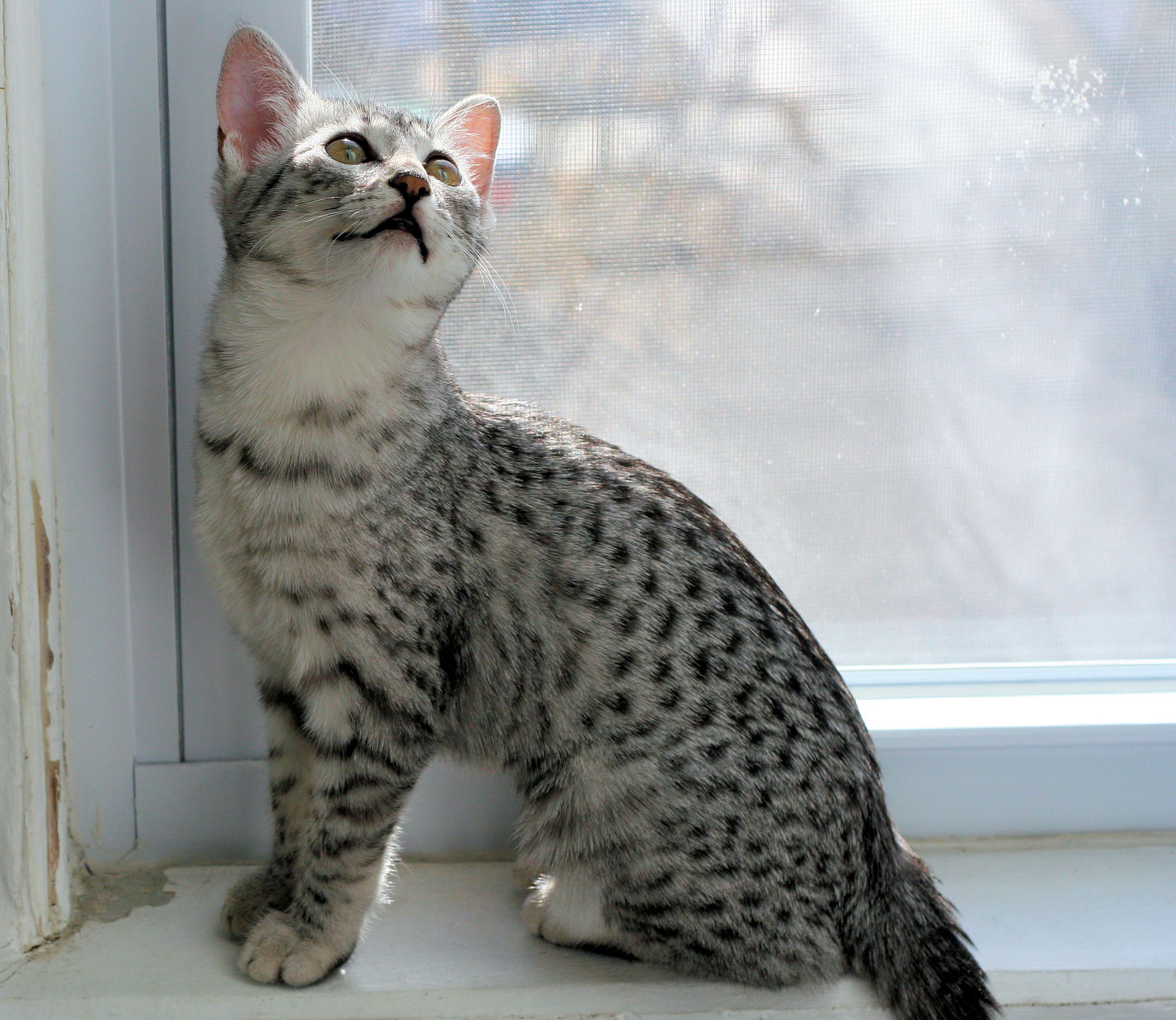
The breed's coat is medium in length and features a solid or spotted tabby pattern, with spots occurring only at the tips of the hairs. The coat contains dark patterns of varying size and shape, and may have a stripe running down the lower spine and tail. Accepted color-pattern combinations include black silver spotted tabby and black ('bronze') spotted tabby, while black smoke and non-smoke solid black and blue/pewter are non-recognized colorations but still permitted in some registries.
The Egyptian Mau has a gently rounded head of medium size, medium to moderately large ears with a broad base and a bit of pointing at the tip, and round, large eyes that are light green in color, though kittens may have amber eyes. The body is of medium length with prominent shoulder blades, and the tail is medium in length and thick at the base. The breed's distinctive appearance and coat require careful attention to maintain its beauty and health.
Temperament and Personality
The Egyptian Mau is known for its gentle and reserved nature, loving its people and desiring attention and affection. However, the breed can be wary of others and may require early and continuing socialization, especially if you plan to show or travel with her. This sensitive and sometimes shy cat can be easily startled by unexpected noises or events, making socialization a crucial aspect of her care. Socialization should begin as early as possible and continue throughout the cat's life.
Temperament tags for the Egyptian Mau include agile, dependent, gentle, intelligent, lively, loyal, and playful. The breed is highly trainable and has a moderate level of friendliness and shedding. While not considered hypoallergenic, the Egyptian Mau's coat does not shed excessively, making it a suitable choice for those with allergies. Potential owners should be prepared for a cat that is both active and requires a significant amount of mental stimulation.
Health Considerations
The Egyptian Mau has a higher prevalence of urate urolithiasis, or bladder stones, compared to mixed-breeds. A review of over 5,000 cases of urate uroliths found that almost half the population of Egyptian Maus had experienced the condition, with an odds ratio of 44.41. This health issue is something potential owners should be aware of and discuss with their veterinarian, who may recommend a low-meat diet to help prevent the formation of bladder stones.
The typical gestation period for a house cat is 64–67 days, but the Egyptian Mau has a longer gestation period of 73 days. This extended gestation period is a factor to consider for breeders and can impact the timing and planning of breeding programs. It also requires careful monitoring to ensure the health and well-being of the mother and kittens during pregnancy and labor.
Breed Standards and Registration
The Egyptian Mau has specific breed standards that outline the ideal characteristics of the breed. These standards are used by cat registries to determine the eligibility of cats for showing and breeding. The breed's standards include specific guidelines for coat length, color, pattern, body structure, and temperament. For example, the breed standard for the coat requires it to be short to medium in length, and the tabby pattern must be clear and distinct.
The Egyptian Mau has been recognized by several major cat registries, including the Cat Fanciers Federation, the Cat Fanciers' Association, and The International Cat Association. These registries play a crucial role in maintaining the breed's integrity and ensuring that only cats that meet the breed standards are registered. The registry process involves a thorough examination of the cat's physical attributes and temperament, ensuring the breed's standards are upheld.
Care and Maintenance
The breed's coat requires minimal maintenance but should be brushed weekly to maintain its appearance and health.
Providing scratching posts, climbing trees, and interactive toys can help keep the cat engaged and healthy. Mental stimulation is equally important, and puzzle toys and training sessions can help satisfy the breed's intelligence and curiosity.
Buying an Egyptian Mau
When considering purchasing an Egyptian Mau, there are several factors to keep in mind. Here is a practical checklist to help potential owners make an informed decision:
- Research reputable breeders who have experience with the breed, including their knowledge of the breed's history and health issues.
- Visit the breeder's facility to ensure the cats are well-cared for and healthy, with clean living conditions and no signs of illness.
- Ask about the cat's health history and any known genetic conditions, including a review of the cat's family health history.
- Consider the cat's energy level and social needs to ensure it fits well with your lifestyle, especially if you have other pets or children.
- Be prepared for the ongoing costs of owning a cat, including food, veterinary care, and grooming, which can be higher for a purebred cat due to specific dietary needs and health concerns.
Buying from a responsible breeder not only ensures you get a healthy and well-socialized cat but also supports the continued development and preservation of the breed. Responsible breeders also offer ongoing support to new owners, which can be invaluable for ensuring the cat's well-being and happiness.
Frequently Asked Questions
What is the lifespan of the Egyptian Mau?
The average lifespan of the Egyptian Mau is about 18 - 20 years. Good nutrition and regular veterinary care support a healthy life.
What is the temperament of the Egyptian Mau?
The Egyptian Mau is known for: Agile, Dependent, Gentle, Intelligent, Lively, Loyal, Playful. Its affection rating is very high. Its energy level is high.
What size and weight is the Egyptian Mau?
It is a small cat, typically around 3 - 6 kg as an adult.
Is the Egyptian Mau easy to care for?
Available ratings indicate low grooming needs, and moderate shedding. Routine brushing, ear and dental care, and nail trims are still recommended.
Is the Egyptian Mau good with kids and other pets?
Available ratings indicate moderate child-friendliness, and moderate pet-friendliness. Supervised, gradual introductions are recommended.
How much exercise does the Egyptian Mau need?
With a high energy level, it needs walks, play or training matched to its stamina.



