Origin and Genetic Makeup
The Cornish Rex, a breed of domestic cat, originated in Cornwall, Great Britain, and is distinguished by its unique genetic makeup. A 4 base pair deletion on chromosome A1, specifically in the lysophosphatidic acid receptor 6 (LPAR6) gene, is responsible for the breed's distinctive coat. This mutation, which induces a premature stop codon, is absent in all straight-haired cats, and LPAR6 encodes a receptor crucial for maintaining the structural integrity of the hair shaft.
This genetic mutation led to the Cornish Rex's extremely fine and naturally curly coat, which is unlike most cat breeds that have three different types of hair: guard hairs, awn hair, and down hair. The Cornish Rex lacks guard hairs and awn hair, having only the down hair or undercoat, which is very fine and about 1 cm long. The breed's coat texture is reminiscent of a peach skin, and it is known for its lack of guard hairs, which contributes to the breed's vulnerability to overheating.
The Cornish Rex's distinctive appearance is a result of a genetic mutation that originated from a litter of kittens born in the 1950s on a farm in Cornwall, UK. A cream-colored male kitten named Kallibunker had the first Cornish Rex coat, and subsequent breeding efforts with his mother and a Siamese cat further developed the breed's characteristics. The breed was recognized by the GCCF in 1967 and has since gained popularity worldwide.
Appearance and Characteristics
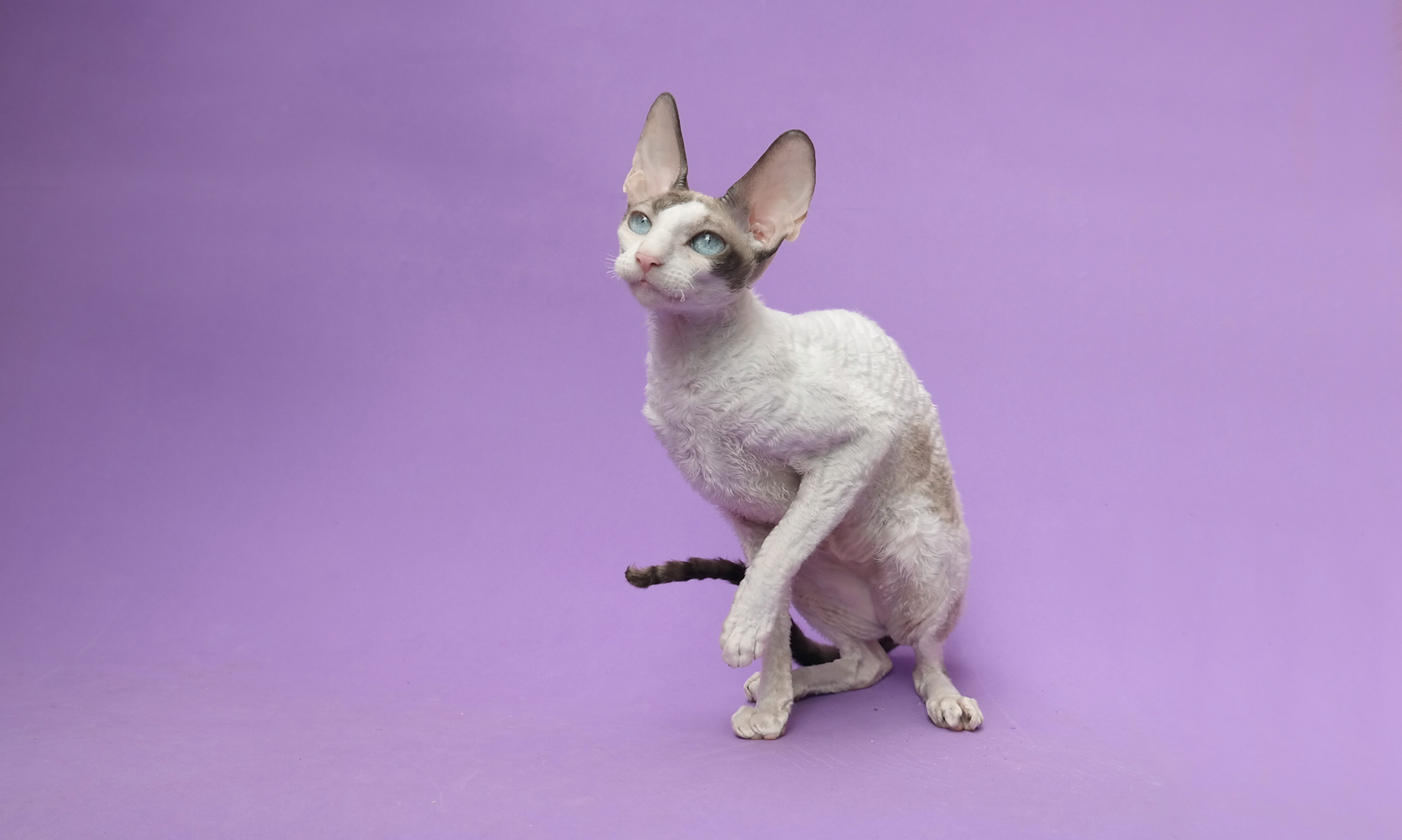
The Cornish Rex is known for its sleek appearance and is often referred to as the Greyhound of the cats due to its galloping run. According to the GCCF standard, the Cornish Rex's color is irrelevant, allowing the cat to be any color. The breed is set apart by its 'foreign type', slender legs and tail, oval eyes, and wedge-shaped head. The Cornish Rex's body is long and slender, with a racy build that emphasizes the breed's athleticism.
The Cornish Rex has large and wide ears at the base with rounded tips, resembling almost mussel shell shapes. Their eyes are medium in size and come in all varieties of eye color, reflecting the breed's diversity. The body is slender and muscular with small paws, and the breed has only down hair, which is extremely fine and naturally curly. The Cornish Rex's coat is so fine that it can be felt through a light cloth, and the hair does not shed, making it easier to maintain.
The Cornish Rex is well-suited for indoor living in warm and dry conditions, as they are sensitive to low temperatures. Their light coat and the fact that they lack guard hairs make them more prone to overheating in extreme heat or cold. This sensitivity to temperature is a practical consideration for owners, who must ensure their Cornish Rex is kept in a comfortable environment year-round.
Temperament and Personality
The Cornish Rex is a confident cat who loves people and will follow them around, waiting for any opportunity to sit in a lap or give a kiss. They are affectionate and enjoy being handled, making them easy to take to the veterinarian or train for therapy work. The breed is known for staying in kitten mode most of their lives and well into their senior years, maintaining a playful and curious nature. This kitten-like demeanor is a charming trait that owners often find endearing.
Temperament tags for the Cornish Rex include affectionate, intelligent, active, curious, and playful. Their high energy level and social needs make them a great companion for active households. The Cornish Rex is also highly trainable, with a high level of adaptability and intelligence, rating 5 out of 5 in these categories.
Health and Lifespan
The Cornish Rex has a lifespan of 11 to 14 years, which is average for domestic cats. In 2013, researchers identified the LPAR6 mutation as the cause of a form of ectodermal dysplasia in humans, which is characterized by a woolly hair phenotype. While this condition is not directly linked to the Cornish Rex, it highlights the importance of genetic research in understanding cat health. The mutation's impact on hair growth is a subject of ongoing study.
Despite some beliefs, the Cornish Rex's short hair does not make it non- or hypo-allergenic. Allergic reactions to cats are typically due to a glycoprotein called Fel d 1, produced in the sebaceous glands of the skin, saliva, and urine. Since Cornish Rex cats groom as much as or even more than ordinary cats, they can still produce a reaction in people who are allergic to cats, although many report lesser to little allergic reaction.
Coat and Grooming
The Cornish Rex has a very fine and naturally curly coat, which is unique among cat breeds. This coat, which consists only of down hair, requires minimal grooming. The Cornish Rex's coat is best suited for indoor living, especially in warm and dry conditions, as they are sensitive to low temperatures.
Despite the fine coat, the Cornish Rex is not considered hypoallergenic. Allergic reactions are not related to hair length but to the presence of Fel d 1, a protein produced by cats. Therefore, while the Cornish Rex may cause fewer allergic reactions than other breeds, they are not a suitable choice for people with severe allergies. Potential owners should be aware of this when considering a Cornish Rex as a pet.
Compatibility and Living Arrangements
The Cornish Rex is highly adaptable and is rated 5 out of 5 for adaptability. They are affectionate and social, making them great companions for families. Their intelligence and trainability also make them easy to live with, as they can be trained for various tasks and behaviors. This trainability is a result of the breed's high intelligence and eagerness to please.
The Cornish Rex is also friendly with children and dogs, rated 4 out of 5 for child-friendliness and 5 out of 5 for dog-friendliness. However, like all pets, they should be introduced gradually to new family members and pets to ensure a smooth integration. The breed's sociability and playfulness make them well-suited for homes with children and other pets.
They are not well-suited for homes where they will be left alone for long periods, as this can lead to boredom and potential behavioral issues.
Buying a Cornish Rex: What to Consider
A home with active family members and other pets is generally the best environment for a Cornish Rex. The breed's high energy level and social nature require a household that can keep up with their playful spirit.
When purchasing a Cornish Rex, it is advisable to choose a reputable breeder who can provide health clearances and ensure that the kitten has been well-socialized. The Cornish Rex's unique genetic makeup and distinctive coat require careful consideration when selecting a pet, as certain health issues may be more prevalent in the breed. A responsible breeder will be able to provide detailed information about the breed's health history and care requirements.
Frequently Asked Questions
What is the lifespan of the Cornish Rex?
The average lifespan of the Cornish Rex is about 11 - 14 years. Good nutrition and regular veterinary care support a healthy life.
What is the temperament of the Cornish Rex?
The Cornish Rex is known for: Affectionate, Intelligent, Active, Curious, Playful. Its affection rating is very high. Its energy level is high.
What size and weight is the Cornish Rex?
It is a small cat, typically around 2 - 4 kg as an adult.
Is the Cornish Rex easy to care for?
Available ratings indicate low grooming needs, and low shedding. Routine brushing, ear and dental care, and nail trims are still recommended.
Is the Cornish Rex good with kids and other pets?
Available ratings indicate high child-friendliness, and very high pet-friendliness. Supervised, gradual introductions are recommended.
How much exercise does the Cornish Rex need?
With a high energy level, it needs walks, play or training matched to its stamina.
Is the Cornish Rex hypoallergenic?
It has some hypoallergenic traits, but reactions vary. Spend time with one and seek professional advice before deciding.



