Origin and History
The Chantilly-Tiffany, also known as the Chantilly or the Foreign Longhair, originated in the late 1960s in North America. The breed was nearly extinct in the late 1980s and again in the late 2000s, and has been considered extinct since 2015 due to the passing and neutering of the last two cats of the Chantilly lineage. This breed's history is marked by a series of near extinctions, reflecting its rarity and the challenges faced by its breeders.
Its official beginning was as a "Foreign Longhair" when Jennie Robinson of New York purchased a pair of semi-foreign longhaired chocolate cats with golden eyes in 1967. Robinson initiated a breeding program to emphasize the traits of these cats, which later became the Chantilly-Tiffany breed. Robinson's efforts were crucial in the breed's development and recognition.
Robinson confirmed that the kittens born in May 1969 were dark self-colours with no points and pinkish paw pads, which is the opposite of traits that identify Burmese cats. This clarification was an important distinction for the breed's identity, setting it apart from other cat breeds with similar appearances.
The breed was first recognized by the Cat Fanciers Association (CFA) in 1972, and later by other registries. Despite its initial popularity, the breed faced challenges due to its rarity and the difficulty in maintaining a pure breeding line.
Physical Characteristics
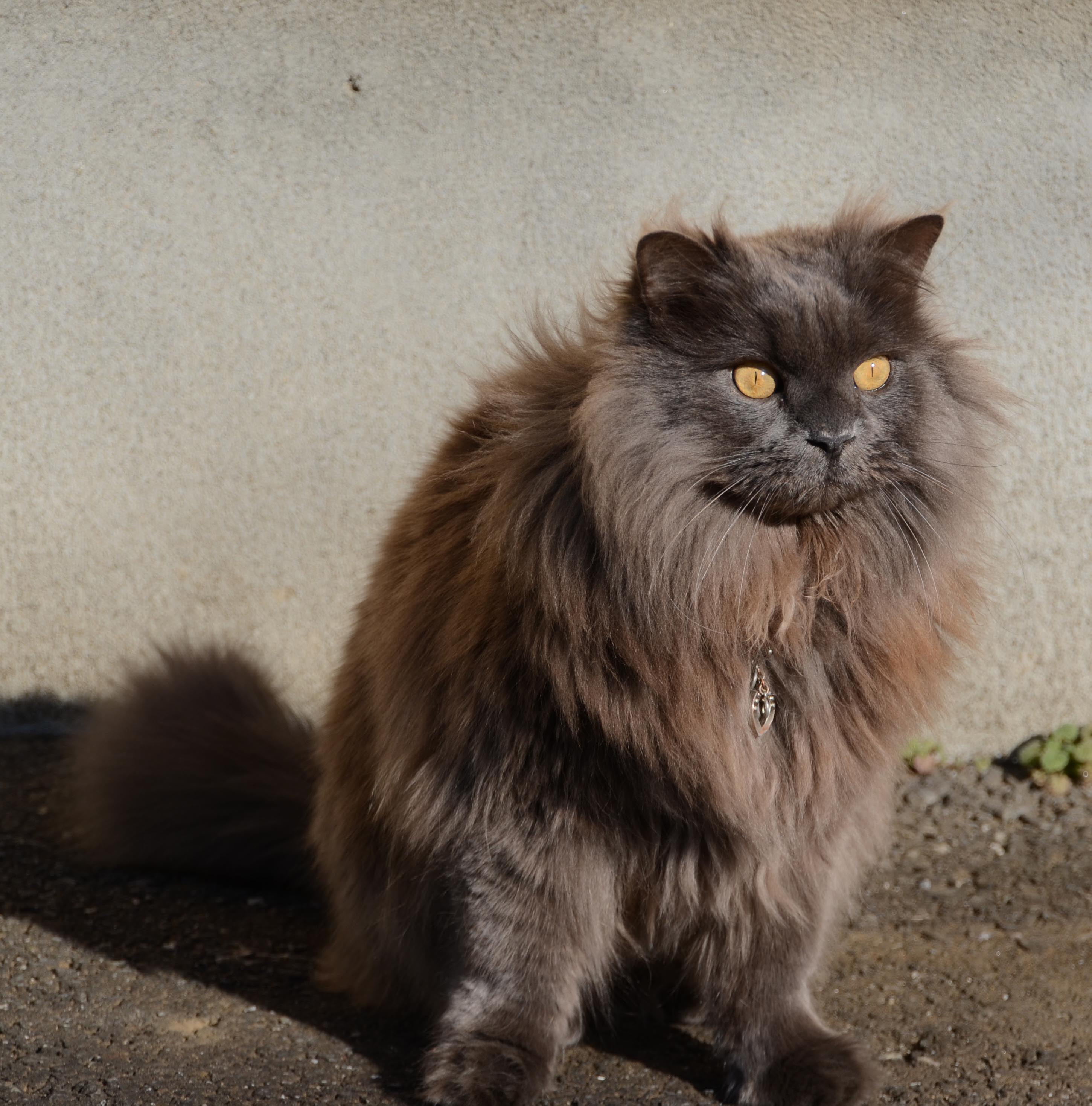
The Chantilly-Tiffany has a semi-foreign body style and a full semi-long coat. The coat is silky, soft, and smooth, with a lack of undercoat, which makes grooming simpler than that of cats with an undercoat. This characteristic is unique to the breed and contributes to its ease of care.
Adult Chantilly-Tiffanys weigh between 3 and 5 kg. The coat color ranges from chocolate to blue, chocolate, lilac, cinnamon, and fawn. The color is rich, with shading in solids occurring toward the underside, adding depth and visual interest to the coat.
The breed has almond to oval-shaped eyes, wide-set, and slightly angled. The eye color intensifies with age, with the only accepted colors being yellow to gold, with or without a green "halo" around the pupil. Green eyes are not allowed, adhering to the breed standard and ensuring consistency in appearance.
The Chantilly-Tiffany's face is distinctive, with a flat skull, a broad forehead, and a slightly rounded chin. The ears are medium-sized, slightly pointed, and set wide apart, contributing to the breed's elegant appearance.
Temperament and Behavior
The Chantilly-Tiffany is affectionate and prefers company over being left alone. They are not demanding but will "chirp" and "talk" as if having a conversation, indicating their interactive nature. This breed's vocalization is a charming trait that adds to their charm and endearing personality.
This breed is loyal and can stay still for extended periods, happily lounging in the lap of its loved one. This trait makes the Chantilly-Tiffany an ideal traveling companion and a great house companion for senior citizens and the physically handicapped. Their gentle nature and patience make them well-suited to various living situations.
Chantilly-Tiffanys are known for their intelligence and adaptability. They can learn tricks and are often curious about their surroundings, making them an engaging and interesting pet for owners who enjoy interactive play and training.
Breeding and Registration
The Chantilly-Tiffany was initially registered with the American Cat Fanciers Association (ACA) in the early 1970s as "Foreign Longhair" and later as "Tiffany. " Due to its rarity, the breed lost its pedigree status, which was a significant setback for breeders and enthusiasts.
It was later recognized and eligible for championship or registration as Experimental or New Breed and Color (NBC) status with various registries including the American Association of Cat Enthusiasts (AACE), American Cat Fanciers Association (ACFA), Canadian Cat Association - American Federation of Cat Clubs (CCA-AFC), Cat Fanciers' Federation (CFF), The Cat Association (TCA), The International Cat Association (TICA), and United Feline Organization (UFO). This recognition allowed the breed to continue its development and maintain a presence in the cat fancy.
Out-crossing with the Havana Brown, Somali, and Nebelung was accepted in this experimental breed. The ACFA only allowed out-crossings with the Havana Brown, Somali, and Nebelung, while the CCA allowed out-crossings with Angora, Oriental, Havana Brown, Somali, and Nebelung cats. These out-crossings were designed to preserve the breed's genetic diversity and prevent inbreeding.
By 2009, only a total of 15 Chantilly cats were ever registered in the Experimental Registry-category (VI) with TICA. This number highlights the breed's rarity and the ongoing efforts to preserve and promote its existence.
Health Considerations
Some Chantilly-Tiffanys may be over-groomed, leading to hair pulling and patches of baldness. This behavior can also result in the formation of digestive tract hairballs, which can be a health concern. Owners should be vigilant for signs of over-grooming and monitor their cat's grooming habits to ensure their health and well-being.
The breed's lack of undercoat makes grooming simpler than that of cats with an undercoat.
Other health concerns that may affect the Chantilly-Tiffany include hypertrophic cardiomyopathy, a heart condition that can be inherited.
Frequently Asked Questions
What is the lifespan of the Chantilly-Tiffany?
The average lifespan of the Chantilly-Tiffany is about 14 - 16 years. Good nutrition and regular veterinary care support a healthy life.
What is the temperament of the Chantilly-Tiffany?
The Chantilly-Tiffany is known for: Affectionate, Demanding, Interactive, Loyal. Its affection rating is very high. Its energy level is high.
What size and weight is the Chantilly-Tiffany?
It is a small cat, typically around 3 - 5 kg as an adult.
Is the Chantilly-Tiffany easy to care for?
Available ratings indicate very high grooming needs, and very high shedding. Routine brushing, ear and dental care, and nail trims are still recommended.
Is the Chantilly-Tiffany good with kids and other pets?
Available ratings indicate high child-friendliness, and very high pet-friendliness. Supervised, gradual introductions are recommended.
How much exercise does the Chantilly-Tiffany need?
With a high energy level, it needs walks, play or training matched to its stamina.



