Origin and Development
The Burmilla, a portmanteau of "Burmese" and "Chinchilla," originated in the United Kingdom in 1981. This breed was accidentally created when a Chinchilla Persian and a lilac Burmese cat mated, resulting in four silver shaded female kittens. The breed's development was initiated by Miranda von Kirchberg and Therese Clarke, who were both breeders and were impressed with the kittens' appearance. The Burmilla Cat Club was formed in 1984, and the breed was officially recognized by the Cat Association of Britain in 1994. The GCCF accepted the Burmilla for championship status in 1995.
In certain cat registries, the Burmilla is classified under the Asian group and is sometimes referred to as the Asian Shaded. The breed has since gained recognition in various registries, including GCCF, FIFe, CCCA, ACF, and CFA. As of late 2011, golden shaded and tipped Burmillas were also recognized within FIFe and ACF.
The Australian National Cats Inc. (ANCATS) uses the name "Australian Tiffanie" for a longhair variety of the Burmilla, which is essentially a longhair Burmilla. This variety is developed separately in Australia from European Tiffanie cats by breeding them back to the Chinchilla Persian, resulting in a breed that contains more than three-quarters Chinchilla Persian and retains the appearance and temperament of the Old-Fashioned Chinchilla Persian.
Notably, the Burmilla's development was not without challenges. The breed faced issues with coat quality and color expression, leading to the establishment of breed standards and genetic research to ensure the health and diversity of the breed.
Appearance
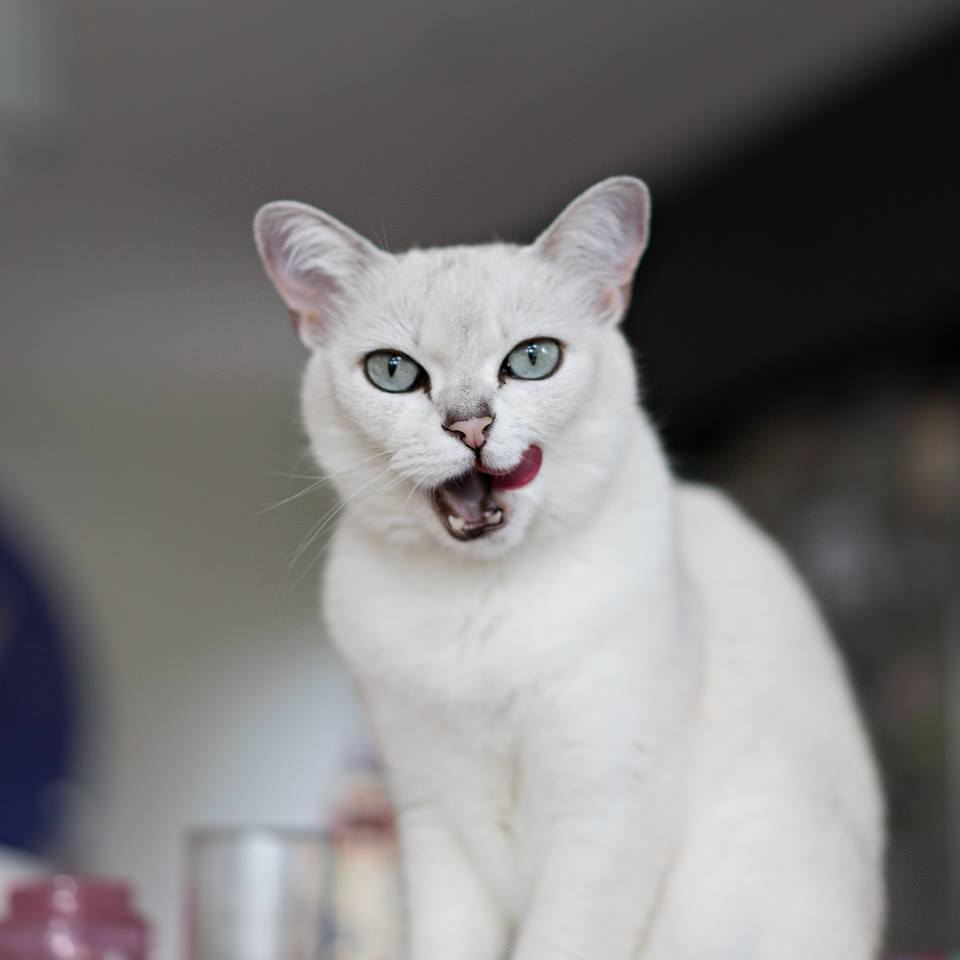
Burmillas are medium-sized cats with muscular, elegant bodies, weighing between 3 to 6 kg. Their most distinctive feature is their sparkling silver coat, which is a result of the crossbreeding between the Chinchilla Persian and Burmese cats. The coat is short and close-lying, similar to the Burmese, but with a slightly padded feel and a soft, silky texture due to the undercoat.
The head of a Burmilla is gently rounded with a medium width between the ears, wide at the eyebrow level, and tapering to a short, blunt wedge. The profile shows a gentle nose break, and the tip of the nose and chin should be in line. The chin is firm with good depth.
Ear size is medium to large, broad at the base with slightly rounded tips, and set with a slight forward tilt in profile. The eyes are large, placed well apart with a slight oblique setting, and have a luminous, green color with some allowance for a gold or yellow tinge in kittens and young adults.
According to the GCCF standard, the Burmilla's color points should be well-defined, with the ears, nose, whisker pads, and tail tip being darker than the rest of the body. The coat should be free from bald spots, and the eyes should be clear and bright.
Coat and Colors
The Burmilla comes in two coat lengths: semi-longhair and shorthair. The most common coat type is the shorthair, which is short, close-lying, and has a slightly padded feel. The semi-longhair coat, known as the Tiffanie in GCCF, follows the lines of the body and has a soft, silky feel with a large plumed tail.
The Burmilla's coat colors include black, blue, brown, chocolate, and lilac. Red, cream, and tortoiseshell (calico) varieties have been bred, although these colors are not recognized by the CCCA in Australia. The Burmilla's shading comes in two major coat patterns: tipped and shaded. Tipped Burmillas have a light dusting of color over a silver or golden undercoat, while shaded Burmillas have 1/4 to 1/2 of their hair length pigmented, giving the appearance of a mantle of color over the back, shoulders, and outside of the legs.
The color genetics of the Burmilla are complex, as it inherits its color ranges from both the Chinchilla Persian and the Burmese. This can result in a wide spectrum of colors, including black, blue, chocolate, lilac, and all the O gene range, both in Burmese Expression or BCR (sepia colored) and in Full Expression or FEx (solid/self-colored). The inheritance of the silver-gene also means that the expression of color can be variable, with silver capable of darkening and cooling colors.
Additionally, the Burmilla's coat may exhibit a "chinchilla effect," where the fur has a fine, downy undercoat that gives it a fluffy appearance, especially in kittens.
Temperament and Personality
The Burmilla is known for its easygoing and friendly temperament. It is affectionate, loyal, and devoted, making it an ideal companion for those looking for a pet that will stay by their side.
Despite its placid nature, the Burmilla is not without its playful side. It enjoys interacting with its owners and displaying kitten-like characteristics, even into adulthood. This breed is sociable and gets along well with children and other animals, making it a great addition to a variety of households.
According to the Cat Fanciers Association, the Burmilla's personality is often described as "dog-like," with a tendency to follow their owners around and even exhibit behaviors such as fetching and bringing back toys.
Health and Care
Burmillas typically have a lifespan of 10 to 15 years, which is slightly longer than the average lifespan for cats.
The breed is also known for its high trainability, making it easier to care for and maintain.
Common health concerns for Burmillas include a predisposition to polycystic kidney disease, a condition characterized by the formation of multiple cysts in the kidneys, which can lead to kidney failure.
Adaptability and Compatibility
The Burmilla is highly adaptable, scoring a 5 out of 5 in adaptability ratings. This means it can easily adjust to different environments and lifestyles. Its affection level is also high, scoring a 5 out of 5, making it a great companion for those looking for a pet that is affectionate and loyal.
The Burmilla is considered child-friendly, scoring a 4 out of 5, and dog-friendly, also scoring a 4 out of 5. This makes it a suitable choice for households with children and other pets.
According to the American Kennel Club, the Burmilla's adaptability is partly due to its calm and friendly nature, which allows it to coexist peacefully with other pets and adapt to various household environments.
Buying a Burmilla
While the initial cost may be significant, the long lifespan and the joy a Burmilla can bring to your home make it a worthwhile investment. The average cost of a Burmilla kitten can range from $500 to $1000, depending on the breeder and the kitten's lineage.
Before bringing a Burmilla into your home, consider whether your lifestyle and living situation are compatible with the breed's needs.
This will help ensure that you are getting a well-bred and healthy kitten.
Frequently Asked Questions
What is the lifespan of the Burmilla?
The average lifespan of the Burmilla is about 10 - 15 years. Good nutrition and regular veterinary care support a healthy life.
What is the temperament of the Burmilla?
The Burmilla is known for: Easy Going, Friendly, Intelligent, Lively, Playful, Social. Its affection rating is very high. Its energy level is high.
What size and weight is the Burmilla?
It is a small cat, typically around 3 - 6 kg as an adult.
Is the Burmilla easy to care for?
Available ratings indicate moderate grooming needs, and moderate shedding. Routine brushing, ear and dental care, and nail trims are still recommended.
Is the Burmilla good with kids and other pets?
Available ratings indicate high child-friendliness, and high pet-friendliness. Supervised, gradual introductions are recommended.
How much exercise does the Burmilla need?
With a high energy level, it needs walks, play or training matched to its stamina.



