Origin and Development
The Bombay cat, a breed with a striking black coat and golden eyes, originated in the United States. Its development began in 1958 when Nikki Horner, a breeder from Louisville, Kentucky, aimed to create a miniature black panther-like cat. The breed was successfully developed through crossbreeding sable American Burmese and black American Shorthair cats, resulting in a cat with a sleek, panther-like black coat and copper-golden eyes.
The American Bombay, recognized by the Cat Fanciers' Association (CFA) in 1970 and The International Cat Association (TICA) in 1979, is distinct from the British Bombay, which is registered as the Asian Self under the Asian group with the Governing Council of the Cat Fancy (GCCF) in the UK. Nikki Horner's original breeding program was pivotal in establishing the breed's standard, which has since been refined by breeders worldwide.
The Bombay cat is relatively rare among pedigreed cats, with the US-type being more popular than the UK-type. Between 2003 and 2022, an average of 45 Bombay kittens were born annually in France, and as of 2024, only 13 were registered with the Fédération Internationale Féline (FIFe), ranking 49th out of 54 breeds in popularity. This rarity adds to the breed's allure and exclusivity among cat enthusiasts.
Appearance and Characteristics
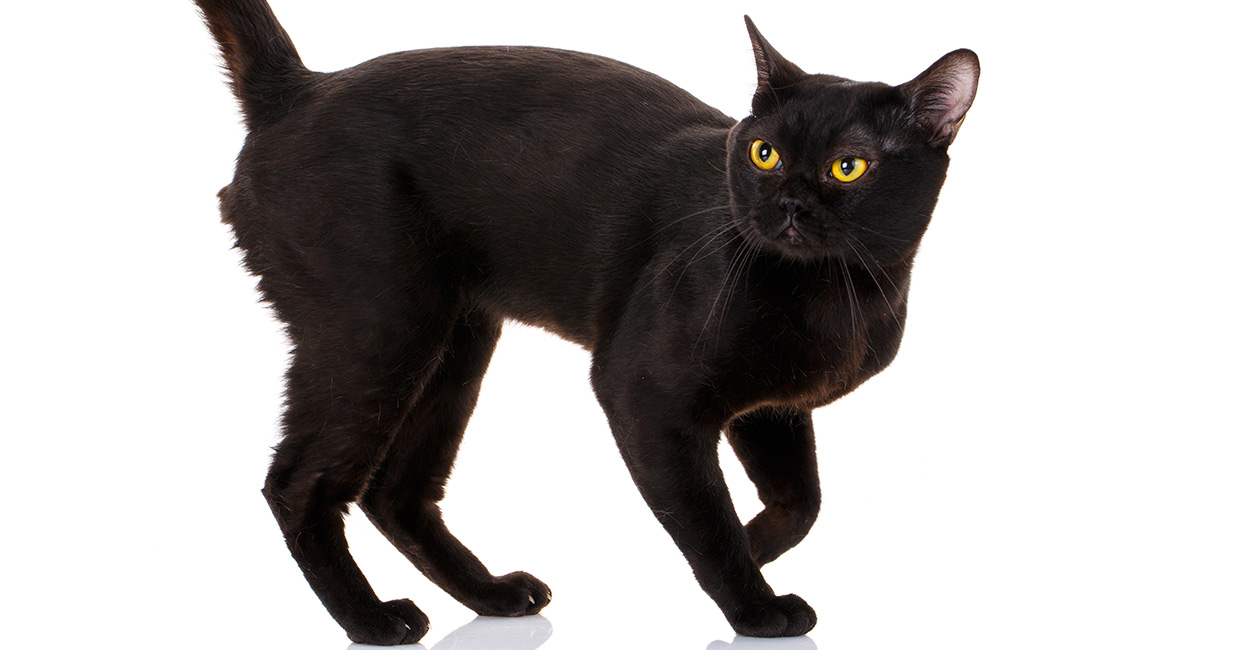
The Bombay is a short-haired breed closely related to the Burmese. Its coat is glossy and solid black, with whiskers and skin also being black. The coat is tight to the body, sleek, and has a lacquered sheen, colored to the roots without paling in mature cats. Juvenile cats under 2 years old may have exceptions to this rule, with a slightly lighter coat color or a hint of silver sheen.
The breed has a medium-sized, Oriental-type body build that is muscular. Males typically weigh between 3.5 and 5 kg (8-11 lb), while females average 2.5 to 3.5 kg (6-8 lb). The head is rounded and short, with a moderate nose "stop" and medium-sized, wide-set, straight ears that are rounded at the tips. This body structure contributes to the breed's distinctive, muscular appearance.
The eyes of the Bombay are large, round, and set far apart, always copper-colored, ranging from bright orange to warm golden. Green eyes are not allowed. This breed is known for its distinctive "patent leather kid with the new penny eyes" appearance, which is a result of the specific coloration and eye shape inherited from its Burmese ancestors.
Temperament and Behavior
Bombay cats are highly social and form strong attachments to their families. They are affectionate and often crave attention, making them ideal companions for those who enjoy a cat that is closely bonded to one person. They follow their caregiver from room to room and may often vocalize about what is happening around them, displaying a level of curiosity and communication that is typical of the breed.
They prefer quiet surroundings and are suitable for families with children, although their strong attachment to one family member might make them less friendly towards strangers.
Intelligent and playful, Bombays are generally easy to train and adapt well to different living situations. Their friendly nature and medium shedding level make them suitable for many households, including those with allergies to cat dander, although they are not considered hypoallergenic.
Health and Lifespan
A healthy Bombay cat has an average lifespan of 15 years, with some living up to 20. However, they are prone to certain health issues, including nasal and sinus problems, which can be exacerbated by their short, flat faces, and gingivitis, which is common in cats with dark-colored coats.
Early detection and treatment of any issues can significantly improve their quality of life. Conditions such as hypertrophic cardiomyopathy and polycystic kidney disease are also known to affect Bombays, and breeders and owners should be vigilant about these potential health risks.
Breed Registration and Popularity
The Bombay cat is registered with several major cat fancier and breeder organizations. The US-type is recognized by the CFA and TICA, while the UK-type is registered as the Asian Self under the Asian group with the GCCF. Despite their rarity, Bombays have a dedicated following and are appreciated for their distinctive appearance and personality, which has contributed to their growing popularity among cat enthusiasts.
The US-type is notably more popular than the UK-type, but both remain relatively rare. In France, an average of 45 Bombay kittens were born annually between 2003 and 2022, while in 2024, only 13 were registered with FIFe. As of June 2024, PawPeds reported a total of 1717 registered Bombay cats, with 406 born after January 2000. This data highlights the breed's niche status within the broader cat fancy.
Buying a Bombay Cat
Here is a checklist to help you make an informed decision:
- Research breeders and their reputation within the cat community.
- Ask for health clearances and certifications for the parents of the kitten.
- Visit the kitten in its home environment to assess its behavior and health.
- Ensure the breeder is willing to provide support and guidance after the purchase.
Bombay cats are a significant investment, both in terms of time and money.
Cost Realism and Household Matching
Prices may range from a few hundred to over a thousand dollars, depending on the breeder's reputation, the kitten's bloodline, and the specific coloration and markings. High-quality pedigreed Bombays from reputable breeders can command a premium price.
Bombay cats are best suited for families or individuals who have the time and space to accommodate their high energy levels and social needs. They require attention, love, and a safe, comfortable living environment. If you live in an apartment or have a smaller living space, ensure it is equipped to meet their needs and provide them with the stimulation and companionship they seek. This includes providing interactive toys, scratching posts, and opportunities for play and exercise.
Frequently Asked Questions
What is the lifespan of the Bombay?
The average lifespan of the Bombay is about 12 - 16 years. Good nutrition and regular veterinary care support a healthy life.
What is the temperament of the Bombay?
The Bombay is known for: Affectionate, Dependent, Gentle, Intelligent, Playful. Its affection rating is very high. Its energy level is high.
What size and weight is the Bombay?
It is a small cat, typically around 3 - 5 kg as an adult.
Is the Bombay easy to care for?
Available ratings indicate low grooming needs, and moderate shedding. Routine brushing, ear and dental care, and nail trims are still recommended.
Is the Bombay good with kids and other pets?
Available ratings indicate high child-friendliness, and very high pet-friendliness. Supervised, gradual introductions are recommended.
How much exercise does the Bombay need?
With a high energy level, it needs walks, play or training matched to its stamina.



